Ian Livingstone
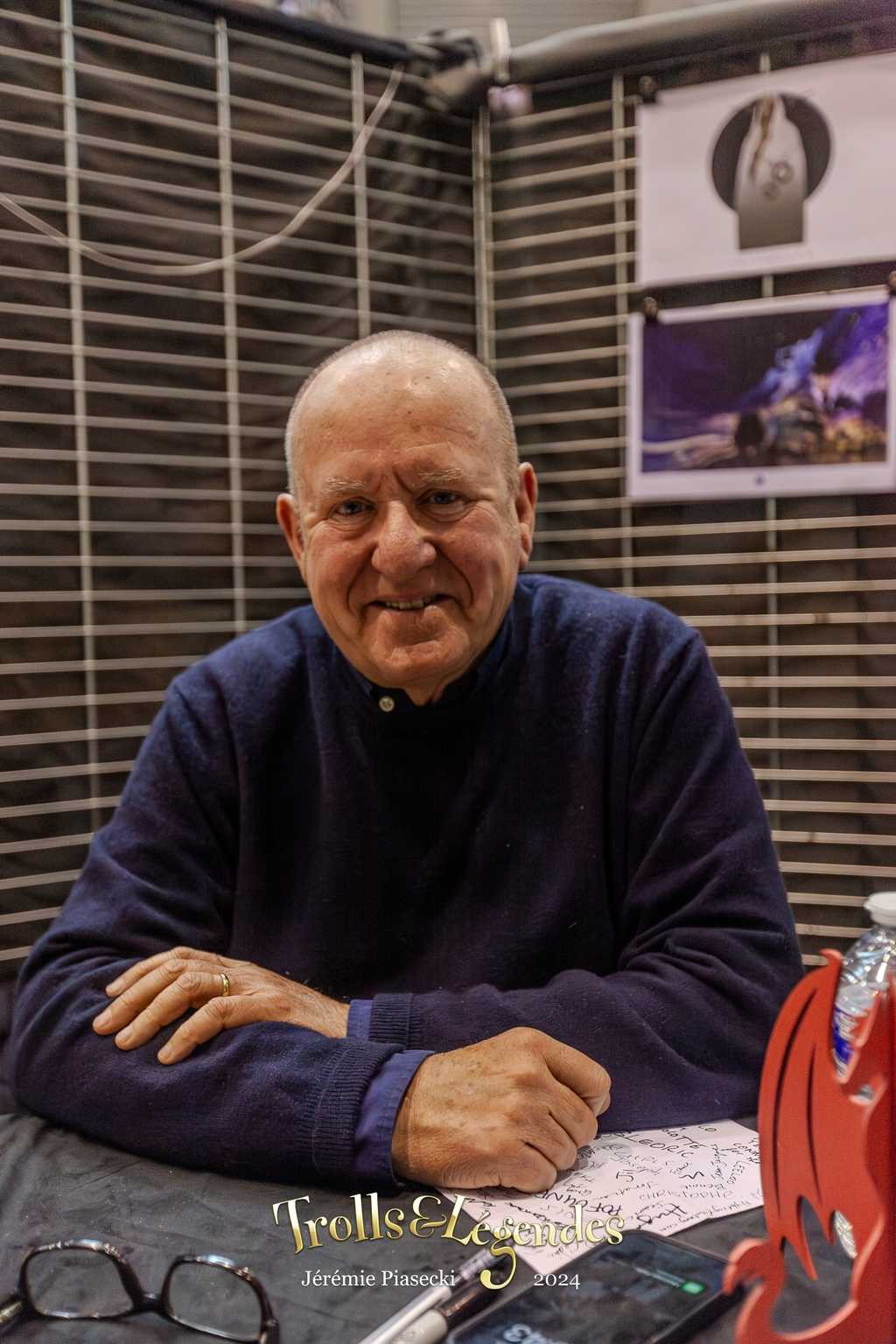
Behind the name of Ian Livingstone lies much more than just a simple author of gamebooks. You may have confused him with a real estate developer or an explorer, but this visionary has transformed the world of role-playing games, fantasy challenges, and even video games through Games Workshop and Eidos.
Ready to explore the legacy of a creator who has shaped generations of players, from Fighting Fantasy to Tomb Raider?
Summary
- Interviews during Trolls and Legends 2025
- Sir Ian Livingstone: pioneer of fantasy challenges and games
- From page to pixel: the revolution of British video games
- The legacy of Livingstone and his current projects
Interviews
Sir Ian Livingstone: pioneer of fantasy challenges and games
Sir Ian Livingstone embodies creative boldness in the gaming universe. Co-founder of Games Workshop with Steve Jackson in 1975, he redefined the industry by popularizing Dungeons & Dragons in Europe. His fantasy challenges, the Fighting Fantasy books, initiated with The Warlock of Firetop Mountain in 1982, have sold 21 million copies worldwide. Knighted in 2022, he remains an essential figure, bridging gamebooks and video games.
In 1975, Ian Livingstone and Steve Jackson created Games Workshop, introducing Dungeons & Dragons to Europe. Their collaboration gave birth in 1982 to the first gamebook The Warlock of Firetop Mountain, published by Gallimard. These fantasy challenges transformed interactive literature, blending storytelling and strategic choice. A global success, marking the advent of a cult genre.
- Co-founding of Games Workshop in 1975 with Steve Jackson, introducing Dungeons & Dragons to Europe and creating Citadel Miniatures
- Launch of the Fighting Fantasy series, transforming interactive literature with 21 million copies sold worldwide
- Creation of Eidos Interactive in 1995, propelling global franchises like Tomb Raider and Hitman
- Fierce advocacy for digital education through the NextGen report and the creation of the Livingstone Academy
Translated into 30 languages, the choose-your-own-adventure books have captivated millions of readers. A global legacy, blending imagination and innovation.
From page to pixel: the revolution of British video games
Sir Ian Livingstone expanded his gaming empire into digital in 1995. After co-founding Eidos Interactive, he oversaw the acquisition of franchises like Tomb Raider, propelling Lara Croft to global icon status. His transition from gamebook to video game marks a decisive turning point, combining narrative creativity and technological innovation.
At the helm of Eidos, Livingstone shaped the British industry by developing global successes. Tomb Raider, Deus Ex, and Hitman established the UK as a major creative hub. His NextGen report (2011) even influenced educational policies, calling for coding education from a young age. Between business and strategic vision, he redefined the rules of the game.
- Tomb Raider, now one of the most iconic franchises in video game history
- Hitman, transforming stealth gameplay and open environment design
- BAFTA Interactive Special Award in 2002 for his global impact on digital entertainment
- Commander of the Order of the British Empire (CBE) for services to the gaming industry
His contributions have been recognized with prestigious awards. Appointed OBE in 2006, then CBE in 2013, he received the title of Sir in 2022. Four honorary doctorates also highlight his pioneering role, from Games Workshop to advocating for digital education.
The legacy of Livingstone and his current projects
Sir Ian Livingstone continues to inspire geek culture. From Warhammer to digital adaptations of fantasy challenges, his influence endures. From video games to comics, his creations transcend eras, proving that a playful legacy can evolve without losing its essence.
In 2024, Livingstone publishes Dice Men, his autobiography recounting the history of Games Workshop. He participates in the Trolls & Legends festival, awarded the Golden Troll 2024. Two new projects emerge: The Dungeon on Blood Island, a Fighting Fantasy gamebook, and Magic Realms, celebrating the art of the series. In Mons, he will sign his works at the event marking the 40th anniversary of Deathtrap Dungeon.
Committed to education, Livingstone co-wrote the NextGen report (2011), calling for coding education in schools. The Livingstone Academy, opened in 2023, trains the creators of tomorrow. Between mentoring and advocacy, he prepares the industry to welcome new talents, proving that innovation comes through transmission.
From Games Workshop to fantasy challenges, Ian Livingstone has charted worlds where imagination reigns. His legacy, bridging video games and education, invites exploration of his universes without delay. As his modern projects reignite adventure, let us remember: where others see rules, he has always seen possibilities.
FAQ
Did Ian Livingstone sell Games Workshop?
Yes, Ian Livingstone did sell Games Workshop. To be clear, he sold his shares, alongside his co-founder Steve Jackson, in 1991. This transaction was made for a sum of 10 million pounds sterling.
Who owns Games Workshop?
Games Workshop is now a public limited company, listed on the London Stock Exchange (LSE:GAW). Essentially, it is owned by its shareholders.
Its stock market introduction took place in October 1994, following a management buyout in December 1991, just after the sale of shares by Ian Livingstone and Steve Jackson.
Who owns the Warhammer franchise?
The Warhammer franchise belongs to the company Games Workshop. This iconic universe was entirely created and developed by the company in the 1980s.
How much is Sir Ian Livingstone worth?
Let's be clear: there is error and there is error. The information available online regarding the fortune of Sir Ian Livingstone, the gaming pioneer, is often contradictory and confusing. This is explained by frequent name confusion.
The staggering figures that can sometimes be found are actually associated with other "Ian Livingstone," including billionaire real estate investors. The value of Sir Ian Livingstone, our gaming visionary, lies primarily in his colossal legacy in the gaming industry, from Games Workshop to Eidos, and not in a publicly quantified personal fortune.